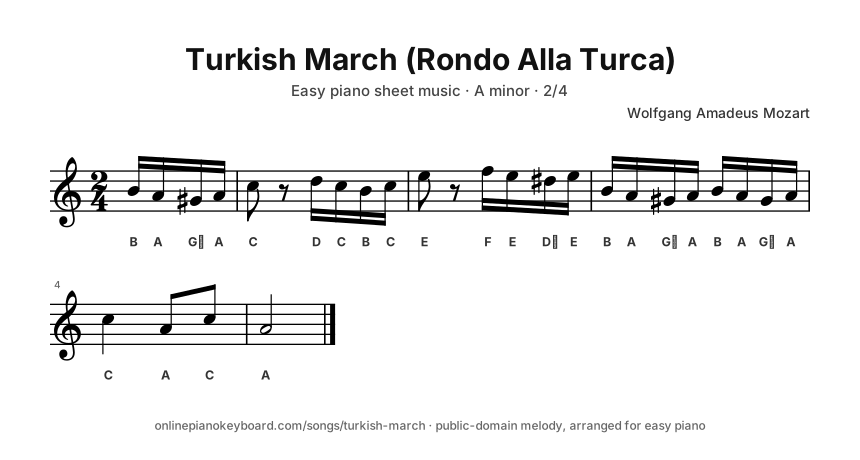
Turkish March sheet music above shows a short right-hand version of the opening of Mozart's Rondo Alla Turca. The piece is the final movement of his Piano Sonata No. 11, K. 331. Letter names beneath the staff help you find each key, Listen plays the excerpt, and Practice waits for you at every note. This page teaches the lively A-minor refrain. It leaves out the left hand, the later sections, and much of the original register. A few high notes are moved down an octave so you can concentrate on the tune's quick rhythm.
Begin before the first full bar
The melody starts with a one-beat pickup: B, A, G sharp, A. Each is a sixteenth note, so all four fit inside one quarter-note beat. The next C lands at the start of the first full bar. Listen once while tapping “one, two” steadily; the pickup feels like four small steps leading into the C. If you begin counting the pickup as a whole 2/4 bar, every later phrase will feel displaced.
G sharp is the black key immediately right of G. Find B and A beside it, then play B–A–G sharp–A without trying to speed up. Mozart uses this little descending and returning turn again later, so it is worth learning cleanly. The first full bar has a C, a brief rest, then D–C–B–C. Keep your hand near middle C and let the rest be silent instead of filling it with another key press.
Follow the rising answer
The next bar starts on E, leaves another short rest, and continues F–E–D sharp–E. D sharp is the black key just right of D. It sounds like a leading step into E; play the two notes gently and listen for the resolution. The following bar brings back B–A–G sharp–A twice. The pattern is familiar by then, but it is still four notes per beat. If one turn becomes uneven, pause Practice, make two slow passes over the black key, and resume.
The source score sends part of this phrase into a higher register. Our version keeps the upper melody close to the middle of the keyboard by moving those high notes down one octave. That changes the register, not the names of the notes. The excerpt then settles on A as its own ending. Mozart's complete rondo continues, so the held A is a stopping point for this learning page rather than a claim about how the full movement ends.
Keep the march pulse
The meter is 2/4: each full bar has two quarter-note beats. Tap “one, two” with your free hand. A rest consumes time just as a sounded note does, and the quick sixteenths divide a beat into four equal parts. Practice at a slow tempo first. Make the short notes crisp by releasing each key, rather than by striking harder. When the pickup and the two following bars feel reliable, join them without stopping and only then raise the speed.
The melody begins in A minor even though the full sonata is called an A-major sonata. The G sharp and D sharp accidentals are part of this opening sound; they are visible on the staff and spelled in the Letter notes tab. For another classical melody, try Ode to Joy, or use reading sheet music to review sixteenth notes and rests.
Printable sheet music
Here is the same arrangement on a single page, with the letter name under every note. Open the image to print it or save it; the Print sheet music button above the keyboard prints it too.
Frequently asked questions
What are the first notes of Turkish March?
The opening pickup is B, A, G sharp, A, played as four quick notes. The first full bar begins on C. The score above shows our short one-hand version.
What piece is Turkish March from?
It is the finale of Mozart's Piano Sonata No. 11 in A major, K. 331. The movement is also called Rondo Alla Turca.
Is this the full Turkish March score?
No. It is a short version of the opening A-minor refrain. The full sonata movement has repeated sections, fuller chords, a left-hand part, and a later A-major section.
What key and meter does the opening use?
The opening refrain is in A minor and 2/4. Its G sharp and D sharp are written accidentals in the source; they give the quick turns their pull.
Why does this version use lower notes?
Some upper notes of the original right hand are moved down an octave so the short melody sits in a smaller keyboard range. Its final A is an ending for this excerpt.
How should I count the fast notes?
Count two quarter-note beats in each full bar. The four pickup notes are sixteenths, so they fill one beat; start them before the next downbeat.