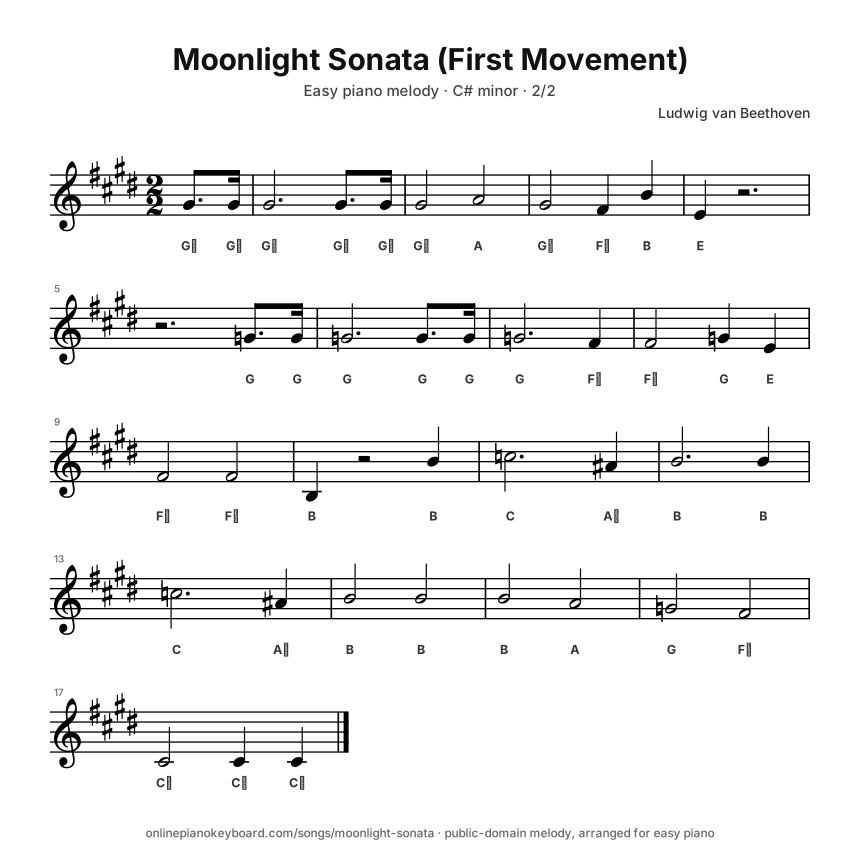
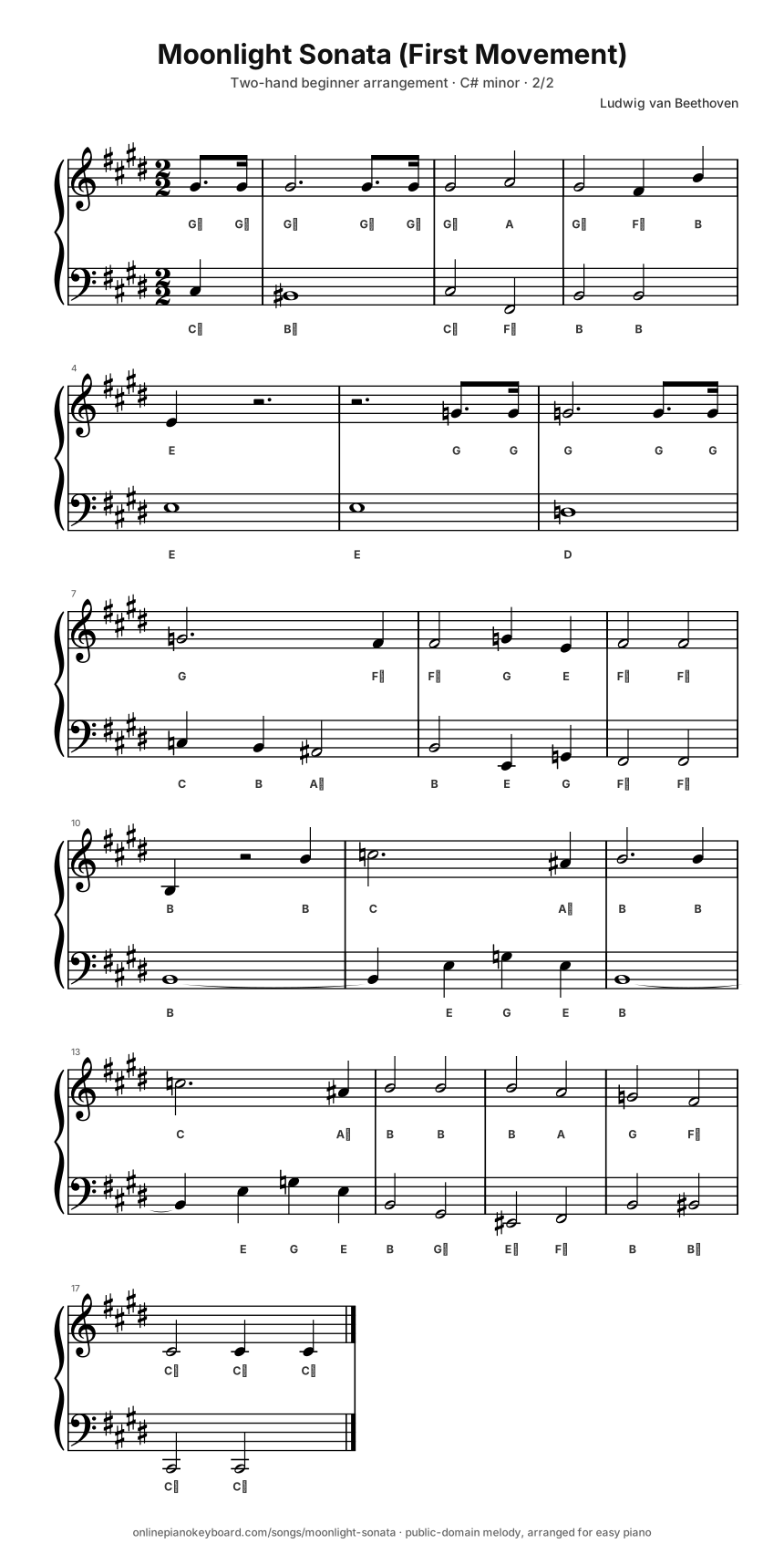
The Moonlight Sonata sheet music above is an easy two-hand version of the melody from Beethoven's first movement. Each note on the staff has its letter name beneath it, and the Letter notes tab gives the same notes without notation. Listen plays it while each key lights up; Practice waits for you to press the next key. In the original, the right hand also plays a steady triplet pattern under the tune. This version leaves that pattern out and gives the left hand one bass note at a time, so you can learn the melody and its bass before the full texture.
About the Moonlight Sonata
Beethoven completed his Piano Sonata No. 14 in C sharp minor, Op. 27 No. 2, in 1801. It was published in Vienna in 1802 with a dedication to his pupil Countess Giulietta Guicciardi. The title page calls it Sonata quasi una fantasia, a sonata in the manner of a fantasy. The nickname came later, from the poet Ludwig Rellstab's image of a lake in moonlight.
The music on this page comes from the slow first movement, marked Adagio sostenuto. At its top Beethoven wrote that the whole piece should be played with the utmost delicacy and without dampers, so the notes ring into one another. The melody enters in bar 5, above the triplets, and moves mostly in long notes: a held tone, a quick pair leading into the next one, then slow steps up and down. This version follows it from that entrance to bar 22.
Find the melody notes
The melody starts on the G sharp above middle C, the middle black key of a group of three. Put your right thumb on E, the white key just right of the group of two black keys, and let fingers 2 to 5 rest over F sharp, G sharp, A and B. The first phrase fits under your hand: G sharp again and again, up to A, back to G sharp, then F sharp, up to B with your little finger, and down to E with your thumb.
The second phrase starts the same way a half step lower, on G natural, the white key just left of G sharp. Every G in that phrase is natural: a run of Gs, then F sharp twice, G and E, two long F sharps, and a low B below middle C. Read the natural sign on the staff rather than the key signature. The third phrase climbs to B and turns around it: C natural above and A sharp below, twice, then two long Bs. The last line steps down through B, A, G natural and F sharp and ends on the C sharp just above middle C, three times.
Count the quick pairs
Count four slow beats in each bar: one, two, three, four. Each quick pair of repeated notes takes one beat together. The first note lasts three quarters of the beat and the second only the last quarter, so the second leads straight into the long note after it. Keep that pair light and unhurried, then let the long note sound through its beats. The original is counted in two, with a half note to each beat; counting four simply splits each of those beats in half.
Add the bass
The left hand plays one note at a time, mostly Bs and Es below middle C, and ends on a low C sharp. Two of its notes have unusual names. B sharp sounds on the white key C, and E sharp on the white key F; the score spells them that way because of the key. Each bass note holds while the melody moves above it. Keep it down for its full length, especially the long Bs in the third phrase, which are tied across the bar line.
Practice one hand at a time
Learn the melody first with Right hand, one phrase at a time, until the change from G sharp to G natural feels natural rather than surprising. Then learn the bass alone with Left hand. When both are secure, choose Both hands and slow the Listen speed while you play along. Keep the sound quiet and even: Beethoven's marking asks for delicacy, not a big tone. Once the melody and bass are comfortable, the triplet pattern of the original, G sharp, C sharp and E in the opening bars, is the next step toward the full score.
For more slow classical melodies, try Für Elise or Gymnopédie No. 1. The C sharp minor scale shows the key's sharps on the keyboard.
Printable sheet music
Here is the two-hand beginner arrangement, with the letter name under every note. Open the image to print or save it. The Print sheet music button above the keyboard lays the score out across paper pages. You can also open the melody-only sheet.
Frequently asked questions
Is this the complete Moonlight Sonata?
No. It is the melody of the first movement from where it enters, in bar 5, to bar 22, with single bass notes taken from Beethoven's left-hand octaves. In the original the right hand also plays a continuous triplet accompaniment, and the whole sonata has three movements: Adagio sostenuto, Allegretto and Presto agitato.
What key is the Moonlight Sonata in?
C sharp minor, with four sharps in the key signature: F, C, G and D sharp. This excerpt also uses G natural and C natural in the melody, and A sharp, B sharp and E sharp in the bass.
What notes start the Moonlight Sonata melody?
G sharp, many times: a quick pair before the first bar line, a long G sharp, another quick pair, then G sharp to A, G sharp, F sharp and B, and down to E. The Letter notes tab shows the whole excerpt.
Where are the triplets?
They are left out. In the original the right hand plays a steady pattern of three even notes to each beat under the melody, starting G sharp, C sharp, E. This page shows one line for each hand, so you can learn the tune and the bass first and add the triplets later from a full score.
How fast should I play it?
Slowly. Beethoven marked the movement Adagio sostenuto and asked for the whole piece to be played with the utmost delicacy. Count four slow beats in each bar; the original is counted as two half-note beats, so its time signature is 2/2.
Why is it called the Moonlight Sonata?
The nickname is not Beethoven's. It grew from the poet Ludwig Rellstab's image of a lake in moonlight and was in print in German by the late 1830s. The title page calls the work Sonata quasi una fantasia, a sonata in the manner of a fantasy.