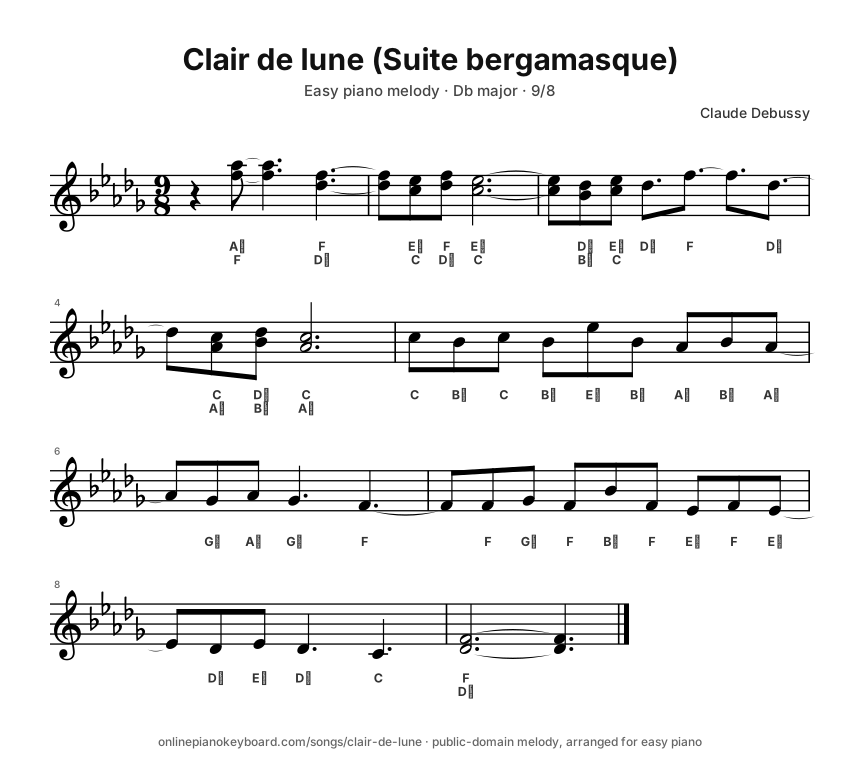
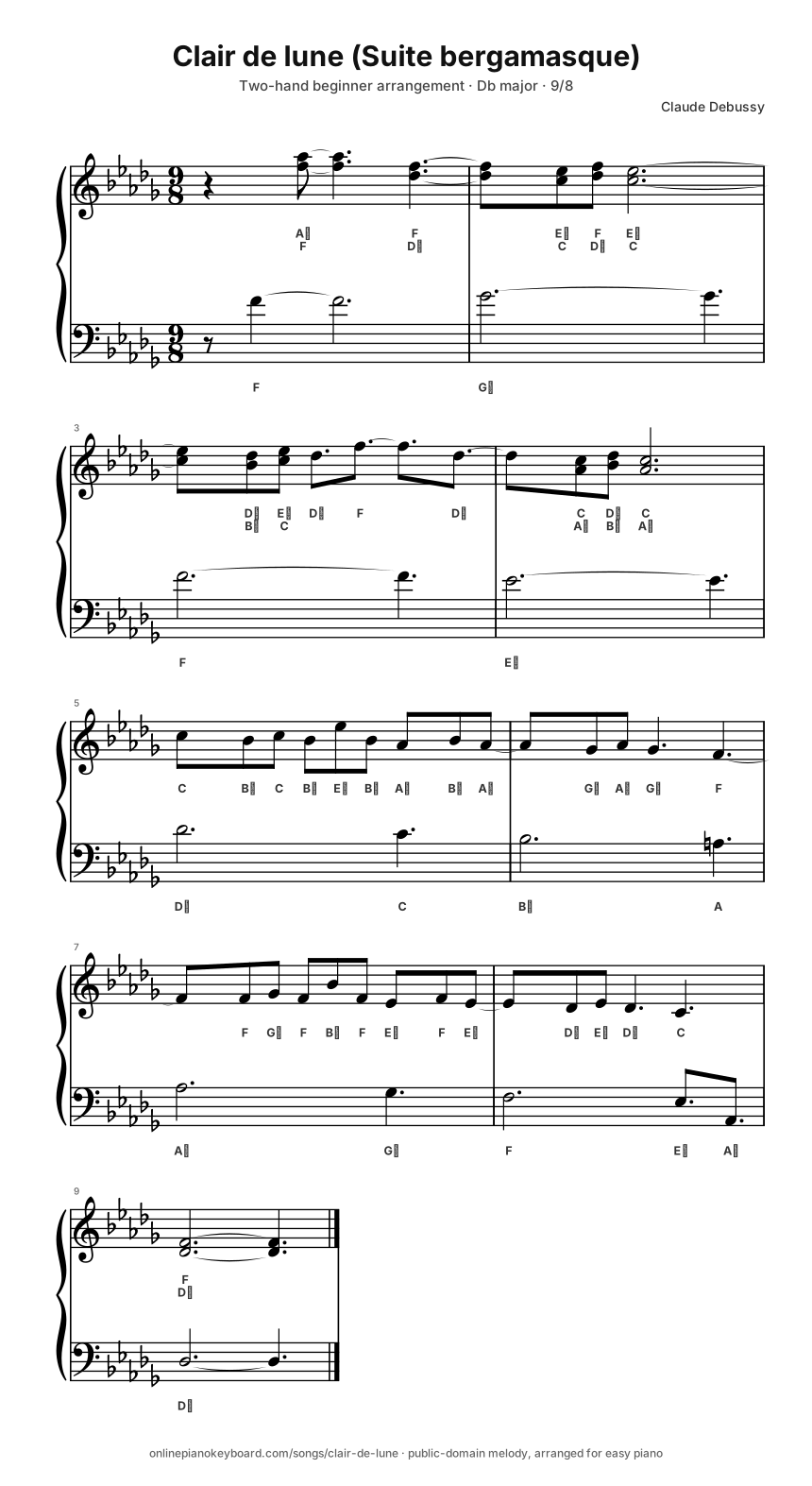
The Clair de lune sheet music above is the opening of Debussy's piece, eight bars and a closing chord, with the letter name under every note. Listen plays it while each key lights up; Practice waits for the next key, or the next pair of keys. The right hand plays Debussy's upper part as written, first in pairs of notes a third apart, then as a single falling line. The left hand plays his lowest notes, one at a time. The inner voices of the full score are left out, so this is the tune and its bass rather than the whole texture.
About Clair de lune
Clair de lune is the third of the four pieces in Claude Debussy's Suite bergamasque, after the Prélude and Menuet and before the Passepied. Debussy began the suite around 1890 and revised it heavily before it was published in 1905. The title comes from Paul Verlaine's poem Clair de lune; the piece was first called Promenade sentimentale, also after Verlaine. It is in D flat major and 9/8 time, marked Andante très expressif, and it begins very softly.
Find the opening notes
Everything starts on F. After a short rest the left hand holds the F above middle C, and the right hand answers with F and A flat an octave higher, then D flat and F. Play each pair together, with your thumb on the lower note, and move the whole hand from pair to pair rather than stretching. The top notes carry the tune: A flat, F, then E flat, F, E flat, then D flat.
In bar 3 the right hand plays single notes for a moment: D flat, a long F, and D flat again, in an even, slower rhythm that runs against the three eighths of each beat. Bar 4 returns to thirds, A flat with C and B flat with D flat, and holds the last pair through the bar.
The falling line
From bar 5 the right hand plays one note at a time, an eighth note to each count: C, B flat, C, B flat, up to E flat, then B flat, A flat, B flat and A flat. Each bar begins on the note the bar before it ended on, held across the bar line: A flat, then F, then E flat. The line circles A flat and G flat, then F and E flat, then E flat and D flat, and settles on C. Keep the eighth notes even and soft; the left hand plays two notes in most of these bars.
Count in three
In 9/8 time a bar has three beats, and each beat is three eighth notes long. Count "one and a, two and a, three and a", or simply nine eighths at first. A tied note keeps sounding across the bar line without being played again. The closing chord, D flat with F over a low D flat, is our own; in Debussy's score the music goes straight on into its next phrase.
Practice in small parts
Learn the right hand in two parts: the thirds of bars 1 to 4, then the single line of bars 5 to 8. Then learn the left hand alone: F, G flat, F and E flat held through bars 1 to 4, then a slow descent. Its notes in bars 1 to 4 sit above middle C, so the bass staff shows them on ledger lines above it. Join the hands with Both hands at a slow Listen speed, keep everything quiet, and let each held note last its full length.
For another slow piece with long held notes, try the Moonlight Sonata or Gymnopédie No. 1. The D flat major scale shows the five flats on the keyboard.
Printable sheet music
Here is the two-hand beginner arrangement, with the letter name under every note. Open the image to print or save it. The Print sheet music button above the keyboard lays the score out across paper pages. You can also open the melody-only sheet.
Frequently asked questions
Is this the complete Clair de lune?
No. It is the opening eight bars with a closing chord of our own. The right hand keeps Debussy's upper part and the left hand his lowest notes; the inner voices of the full score are left out.
What key is Clair de lune in?
D flat major, with five flats in the key signature: B, E, A, D and G flat. It is in 9/8 time: three beats in a bar, each beat three eighth notes long.
What are the first notes of Clair de lune?
After a short rest the left hand holds the F above middle C, and the right hand plays F and A flat an octave higher, then D flat and F. The top notes of the right hand carry the tune: A flat, F, E flat, F, E flat, D flat.
Why does bar 3 have dotted notes?
There Debussy writes two notes in the time of three eighths, so each lasts one and a half eighths. This sheet writes those lengths exactly, so the D flats appear as dotted eighth notes and the F between them lasts three eighths.
Why is it called Clair de lune?
Debussy took the title from Paul Verlaine's poem Clair de lune. The piece was first called Promenade sentimentale, also from Verlaine, before he revised the suite for its publication in 1905.
How fast should I play it?
Slowly and quietly. Debussy marks it Andante très expressif and starts it very softly. Count three unhurried beats in each bar and let every held third sound for its full length.